
 Databricks🟡Intermediate
11 min read
Delta Lake vs Apache Iceberg: Default on Databricks vs Shared Lake
Table-format choice in 2026: deletion vectors, catalogs, and which engine you are willing to lock in.
- databricks
- snowflake
- tools
All stacks · Warehouses & analytics
Lakehouse architecture, Delta Lake, Unity Catalog, and notebooks.
 Databricks🟡Intermediate
Table-format choice in 2026: deletion vectors, catalogs, and which engine you are willing to lock in.
 Databricks🟡Intermediate
What the lakehouse actually is, how Delta Lake adds ACID transactions to cheap object storage, and the medallion architecture in practice.
 Databricks🟡Intermediate
What DLT genuinely buys you, how expectations and streaming tables behave in production, and the four situations where I still write plain Spark jobs instead.
 Databricks🟡Intermediate
How I take 30 percent off a Databricks bill in a week: kill all-purpose clusters for jobs, price spot properly, test Photon per workload, and rank spend with system.billing.
 Databricks🟡Intermediate
How I structure Unity Catalog for real teams: three-level namespace design, group-based grants, lineage that works, and a hive_metastore migration that ships.
 Databricks🟡Intermediate
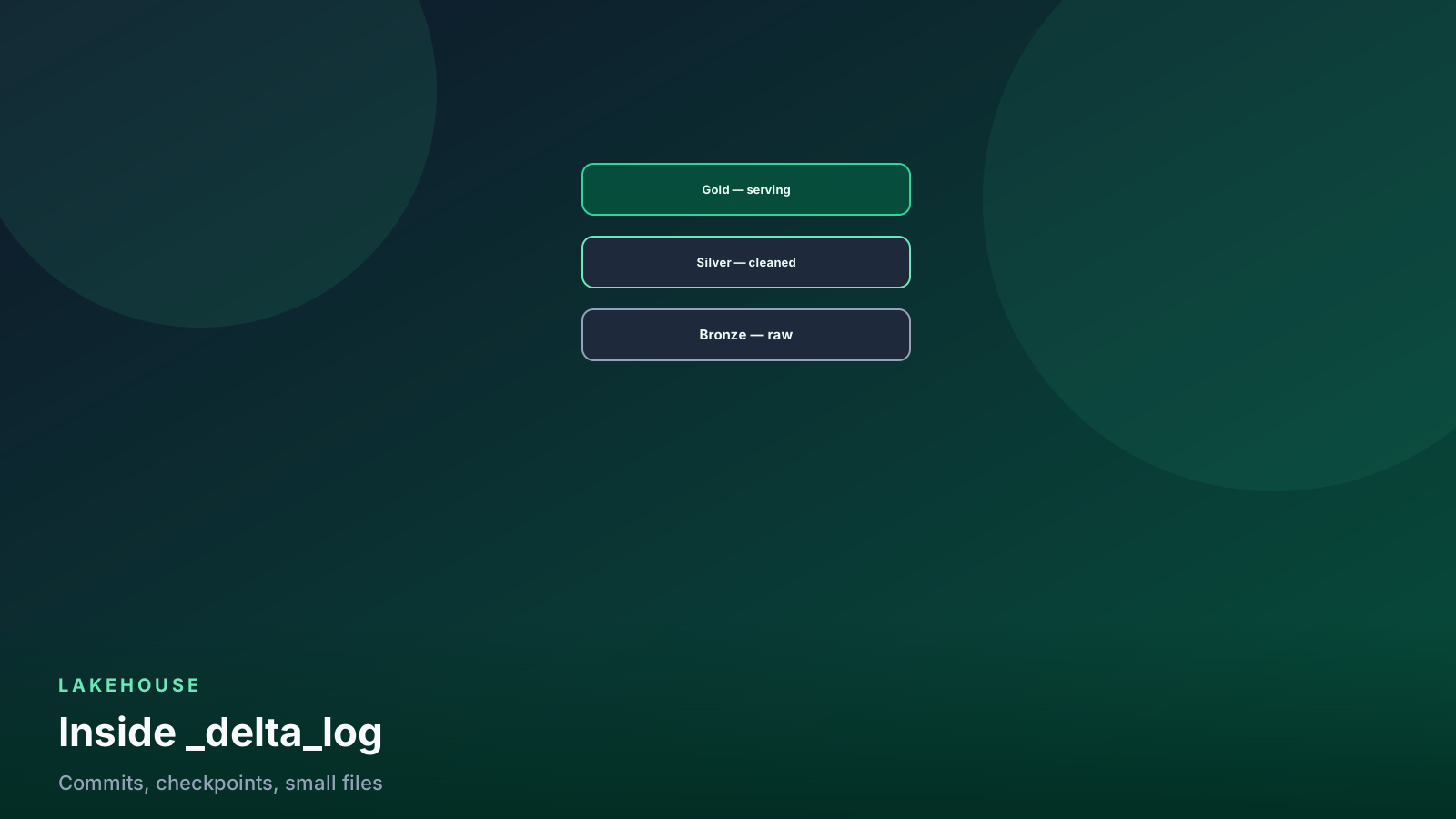
How the _delta_log actually works: JSON commits, optimistic concurrency, checkpoints, deletion vectors, and the small-file problem nobody escapes.
 compare🟢Beginner
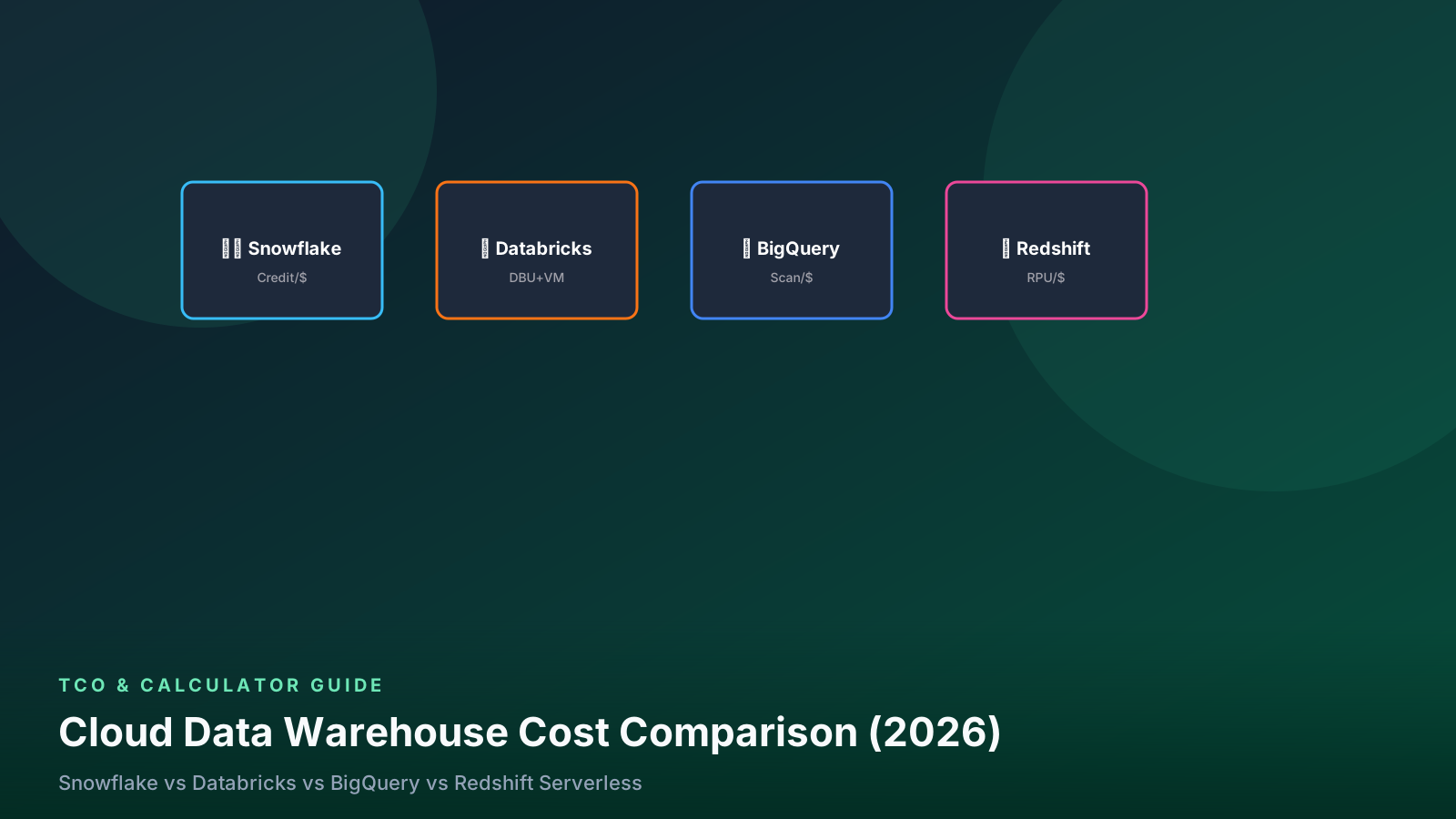
A comprehensive TCO guide: pricing equations, real-world workload cost models, and how to use our interactive data stack cost estimator.
 compare🟢Beginner
A pragmatic comparison: Databricks for Lakehouse/Spark/ML vs BigQuery for Serverless/SQL-native analytical workflows on GCP.
 Kubernetes🟢Beginner
Airflow and Spark can spawn unbounded pods, requests and limits are the difference between busy and evicted, crash loops hide in operators, and MWAA or Databricks is sometimes the right way to not run K8s.
 Tools🟡Intermediate
An honest head-to-head: SQL warehousing vs Spark lakehouse, Iceberg interoperability, Cortex vs Mosaic, and when you actually need both.
Databricks turned Spark into a platform: Delta Lake for reliable tables on object storage, Unity Catalog for governance, and serverless SQL warehouses that compete head-on with Snowflake. The lakehouse pitch is real — one copy of data serving BI, engineering, and ML.
These articles cover the platform as it is actually operated: Delta internals and optimization, Auto Loader ingestion, Unity Catalog permission design, workflows versus external orchestrators, and the cost model behind DBUs before the first invoice surprises you.
Warehouse-grade tables (ACID transactions, schema enforcement, time travel) implemented directly on object storage via an open format like Delta or Iceberg, queryable by multiple engines. You keep one copy of data in open files instead of loading a proprietary warehouse.
Snowflake for SQL-first analytics with minimal operations; Databricks for Spark, ML, and streaming-heavy platforms that want to own their storage. Plenty of enterprises run both. Our comparison article walks through workload-by-workload decisions rather than a single verdict.
Usually all-purpose clusters running interactive workloads around the clock, oversized driver nodes, and jobs that never enabled autoscaling or spot instances. Job clusters with aggressive auto-termination are the single biggest saver.
Yes. Streaming and frequent small writes create small files that slow every read; OPTIMIZE compacts them (liquid clustering supersedes static ZORDER for new tables). VACUUM removes stale files but respects the retention window — never shorten it below your time-travel needs.
Not for new deployments. It is the governance layer for everything current on the platform — fine-grained permissions, lineage, sharing — and new features increasingly assume it. Migrating from hive_metastore later is much more painful than starting on UC.